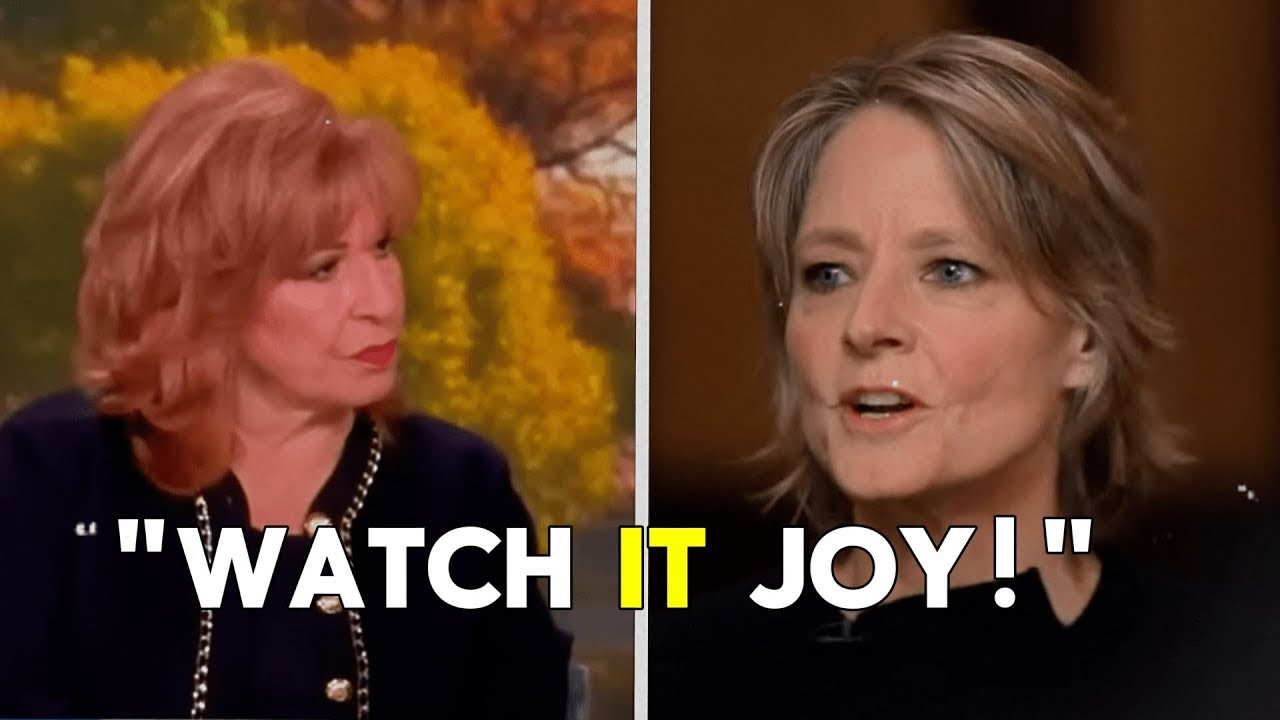
In a 𝓈𝒽𝓸𝒸𝓀𝒾𝓃𝑔 live television showdown on ABC’s The View, Jodie Foster, the revered actress and director, erupted in a fierce confrontation with host Joy Behar, accusing her of perpetuating sexist gossip over genuine discussion about her acclaimed new film. The exchange 𝓮𝔁𝓹𝓸𝓼𝓮𝓭 deep-seated industry biases, leaving the audience stunned and the hosts scrambling as tensions boiled over in real time.
Foster, known for her poised demeanor, arrived to promote her Oscar-buzzed directorial project, a deeply personal story that has drawn widespread critical praise. But the conversation quickly veered off course when Behar probed into tabloid rumors about on-set conflicts with a lead actor, transforming the set into a battleground of words and egos.
The initial warmth faded as Behar pressed Foster on alleged threats to fire the actor, dismissing her responses with a laugh that Foster interpreted as dismissive. “Creative disagreements are part of filmmaking,“ Foster calmly asserted at first, but her tone sharpened when Behar suggested she was “hard to work with,“ a label Foster linked to gender double standards.
In a pivotal moment, Foster challenged Behar directly, highlighting how male directors are celebrated for demanding excellence while women face scrutiny. “When I set high standards, I’m called difficult, but men are visionaries,“ she declared, her voice steady yet intense, drawing murmurs from the live audience.
Behar defended her line of questioning as “fair journalism,“ claiming it reflected viewer curiosity, but Foster fired back, questioning whether Behar had even watched the film. The admission that she hadn’t ignited further sparks, with Foster decrying the interview as shallow entertainment rather than meaningful dialogue.
As the clash escalated, other hosts like Whoopi Goldberg attempted to intervene, suggesting a break, but Foster insisted on continuing, emphasizing the importance of addressing how women in power are undermined. “This is about real issues, not manufactured 𝒹𝓇𝒶𝓂𝒶,“ she stated firmly.
Behar accused Foster of being “too sensitive“ and “playing the victim,“ a charge that only fueled Foster’s resolve. Drawing from her five-decade career, Foster recounted her journey from child star to award-winning director, refusing to let unsubstantiated rumors define her legacy.
The exchange grew heated, with voices overlapping as Foster interrupted Behar to demand evidence for her claims. “Have you read any serious reviews, or just gossip sites?“ Foster asked, exposing Behar’s reliance on unverified producer notes, which Behar admitted under pressure.
Foster’s composure never fully broke, but her words carried the weight of accumulated frustration, turning the segment into a masterclass on standing against injustice. The audience’s applause underscored the moment’s impact, signaling broader support for her stance.
Throughout, Foster highlighted the double standards women face, noting that a male counterpart might not endure such probing. One host even conceded that point, adding to the tension as Behar grew defensive, accusing Foster of condescension.
In the end, as the show wrapped, Foster remained seated, unflinching, delivering a quiet but powerful rebuke of the entertainment industry’s penchant for spectacle over 𝓈𝓊𝒷𝓈𝓉𝒶𝓃𝒸𝑒. Her eruption wasn’t just personal; it was a call to elevate conversations about women’s achievements.
This incident has already sparked widespread reactions online, with fans and critics praising Foster’s bravery while debating the role of hosts in celebrity interviews. Her words resonated far beyond the studio, challenging viewers to reconsider how media portrays professional women.
Foster’s film, central to the discussion, continues to garner accolades, but this confrontation may overshadow its release, forcing a larger conversation about sexism in Hollywood. The View’s producers have yet to comment, but the episode is already being replayed across social media.
In an industry often criticized for glossing over real issues, Foster’s stand serves as a reminder of the ongoing fight for respect and integrity. Her eruption wasn’t merely a clash; it was a pivotal moment that could inspire change in how stories about women in power are told.
Behar’s approach, typically known for its edge, appeared unprepared for Foster’s depth, leading to a rare on-air unraveling that 𝓮𝔁𝓹𝓸𝓼𝓮𝓭 the fragility of live television formats. Foster’s retort about “intellectual laziness“ echoed through the studio, leaving an indelible mark.
As clips of the confrontation circulate, it’s clear this wasn’t just another celebrity spat; it was a seismic shift in public discourse, urging audiences to demand more from their entertainment. Foster’s legacy, built on decades of excellence, now includes this unscripted act of defiance.
The fallout could influence future interviews, with guests potentially more guarded or hosts more diligent in their research. For now, the event stands as a testament to Foster’s unwavering principles, proving that even in the spotlight, truth can prevail over sensationalism.
Foster’s pointed question—whether a male director would face the same scrutiny—lingered in the air, prompting reflection among the panel and viewers alike. This wasn’t just about one film or one show; it was about systemic inequities that Foster has navigated throughout her career.
In wrapping up, the confrontation ended not with apologies but with Foster’s resolute presence, a symbol of resilience that may redefine how women in Hollywood assert their narratives. The world is watching, and Foster’s eruption has ignited a fire that won’t easily fade.