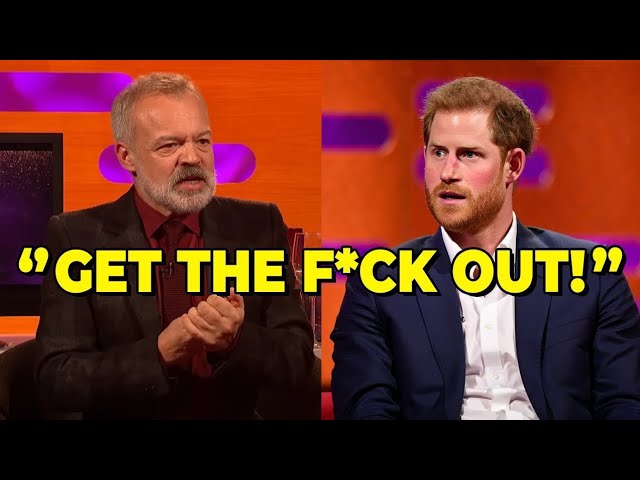
In a 𝓈𝒽𝓸𝒸𝓀𝒾𝓃𝑔 turn of events on the Graham Norton Show, Prince Harry was abruptly escorted off the set after a heated clash with host Graham Norton over royal family tensions. The interview, meant to promote his memoir, spiraled into a fiery confrontation, exposing deep-seated grievances and leaving audiences worldwide stunned by the raw emotion.
The stage was set for what promised to be a light-hearted chat, but Prince Harry’s appearance quickly veered into uncharted territory. Norton, known for his affable style, began with innocuous questions about life in California and family joys. Yet, as the conversation delved into the Sussexes’ rift with the monarchy, Harry’s responses grew intense.
He defended his decisions fiercely, citing mental health struggles and media scrutiny that have defined his post-royal life. The audience, initially thrilled, watched as the exchange turned confrontational, with Harry accusing the show of sensationalism. Norton’s attempts to lighten the mood with humor fell flat, escalating the tension.
Producers scrambled backstage as Harry’s voice rose, challenging Norton directly on the ethics of probing personal wounds. The host, usually unflappable, struggled to regain control, suggesting Harry was dwelling on the past. This remark ignited the prince’s anger, leading to sharp retorts about accountability.
Security was discreetly summoned when Harry stood his ground, refusing to back down. The interview ended abruptly, with Norton announcing a halt amid gasps from the live crowd. What started as promotion for his book “Spare“ transformed into a global spectacle of defiance.
Social media erupted immediately, with clips of the clash going 𝓿𝒾𝓇𝒶𝓁. Hashtags like #StandWithHarry trended as supporters praised his candor, while critics labeled him entitled. The fallout dominated headlines, from tabloids to major networks, amplifying debates on celebrity privacy.
Harry’s team issued a statement defending his right to speak truthfully, emphasizing the need for boundaries in media interactions. Norton, in a rare response, expressed regret but maintained his questions were fair for a public figure. The incident highlighted ongoing royal family strains.
Television analysts dissected the moment, replaying Harry’s emotional responses and Norton’s visible discomfort. Ratings for the show soared, turning the 𝒹𝓇𝒶𝓂𝒶 into a viewer magnet, yet it raised ethical questions about talk show boundaries. Harry’s advocacy work, including the Invictus Games, gained renewed spotlight.
Behind the scenes, sources revealed the interview was meant to be scripted, but Harry’s unfiltered passion derailed plans. His book sales spiked as curious readers sought context, connecting dots to past events like the Oprah interview. The clash became a case study in fame’s pressures.
Meghan Markle reportedly stood by him, offering support amid the backlash. Royal commentators weighed in, some sympathizing with Harry’s stance, others criticizing the outburst. The event sparked broader discussions on mental health in the public eye, aligning with Harry’s campaigns.
As details emerged, it was clear the buildup included warnings from Harry’s publicists about sensitive topics. Norton’s improvisational approach clashed with these guidelines, leading to the explosive pivot. The audience’s mixed reactions—cheers and unease—reflected divided opinions on the prince’s behavior.
Legal experts pondered potential fallout, but both sides seemed focused on moving forward. The incident influenced media practices, with calls for more respectful guest handling. Harry’s journey from royal duty to independence was thrust into the spotlight once more.
In the days that followed, parodies and memes flooded online platforms, from TikTok edits to satirical sketches. Yet, beneath the humor, the event underscored the human cost of fame. Harry’s tweet on boundaries resonated, drawing support from advocacy groups.
Norton’s show adapted, implementing sensitivity training to avoid future mishaps. The clash not only boosted viewership but also prompted industry-wide reflections on interview ethics. For Harry, it was another chapter in his quest for authenticity amid relentless scrutiny.
Experts analyzed body language, noting Harry’s clenched fists and Norton’s forced smiles as symbols of the underlying conflict. The event bridged divides, sparking conversations on forgiveness and growth. As weeks passed, Harry’s focus shifted back to philanthropy, announcing new initiatives.
The global reaction was swift, with celebrities and fans alike weighing in. Some, like James Corden, defended Harry, sharing similar experiences. Others sided with Norton, arguing for journalistic freedom. The incident’s ripple effects extended to royal biographies and pop culture analyses.
In essence, this breaking news event 𝓮𝔁𝓹𝓸𝓼𝓮𝓭 the fragile line between entertainment and personal truth. Prince Harry’s dramatic exit from the Graham Norton Show served as a wake-up call for media accountability. The world watched, captivated by the urgency of his story.
As the dust settles, the implications linger, challenging how celebrities navigate public platforms. Harry’s resilience in the face of adversity continues to inspire, even as it fuels ongoing debates. This moment in history marks a pivotal shift in royal-media relations.
The fallout extended to international discussions, with experts linking it to broader themes of mental health advocacy. Harry’s unyielding stance reminded audiences of the real struggles behind the glamour. Norton’s program, while thriving on the buzz, faced calls for reform.
Ultimately, the clash on the Graham Norton Show became a symbol of rebellion against scripted narratives. It highlighted the power of authenticity in an era of polished images, leaving a lasting impact on entertainment and public discourse. The story evolves, but its urgency remains undeniable.